The Complete 72-Hour Emergency Kit Checklist
Most emergency agencies recommend having enough supplies to be self-sufficient for at least 72 hours, the typical window before outside help reliably arrives after a large-scale disaster. That number isn't arbitrary, and it isn't a ceiling either. It's the floor.
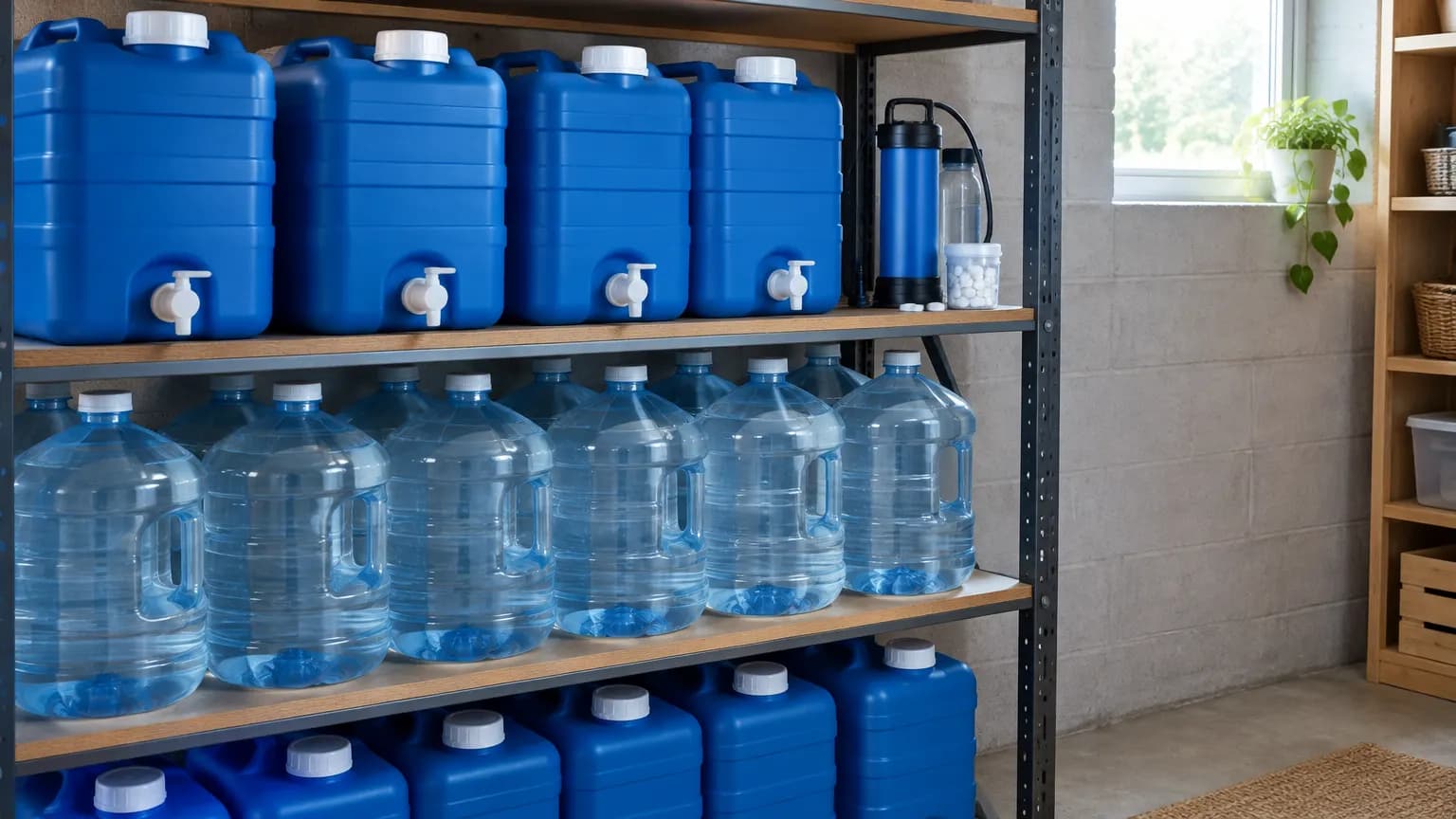
Start with water: one gallon per person per day, minimum, split between drinking and basic sanitation. For a family of four, that's twelve gallons just to clear the 72-hour mark. Store it in food-grade containers, rotate it every six months, and keep a portable filter as a backup for when your stored water runs out.
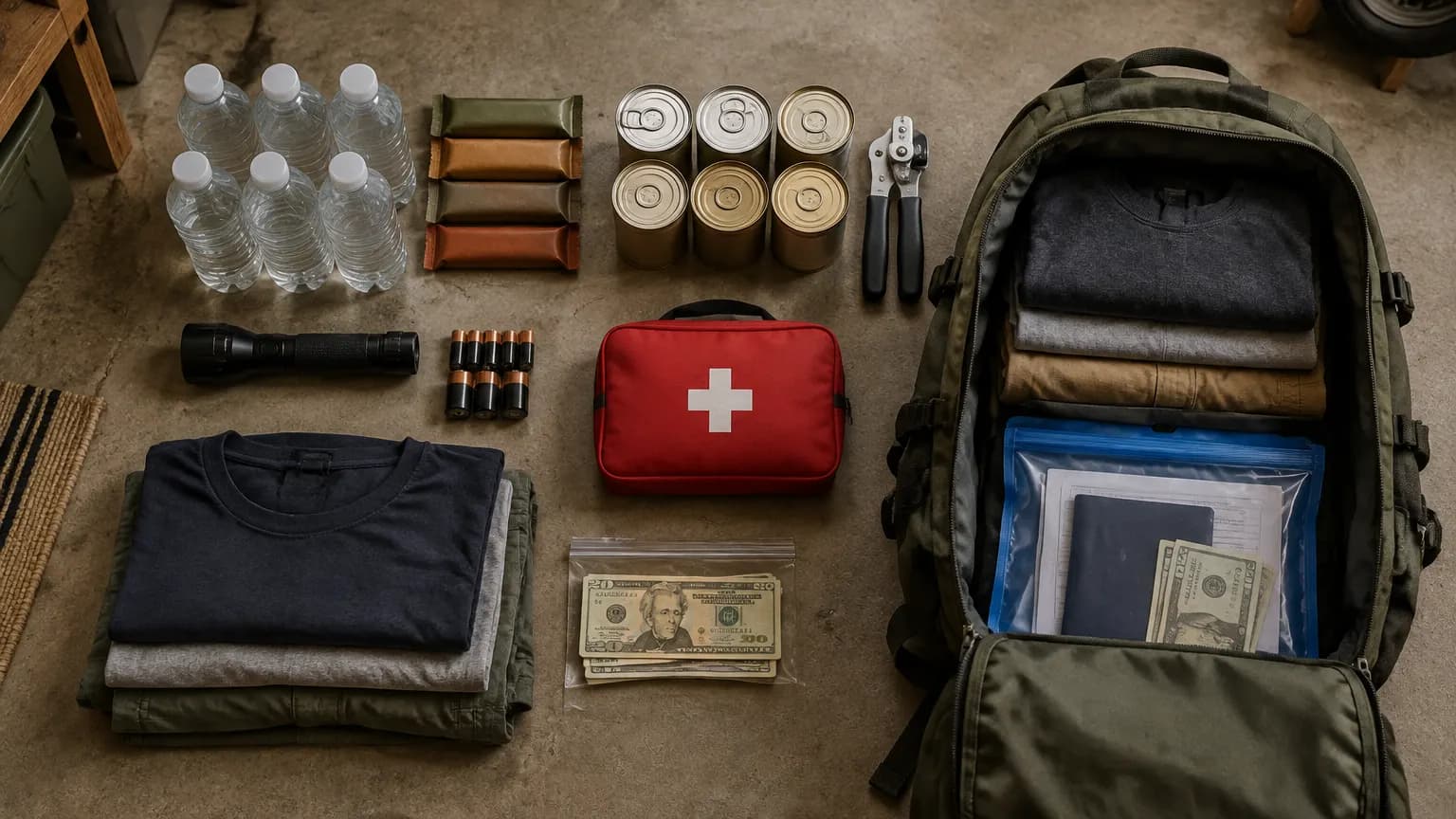
Food should require no refrigeration, little to no water, and minimal preparation. Think calorie-dense, shelf-stable staples: nut butter, dried fruit, protein bars, canned goods with a manual opener packed alongside them. Don't stock food your household won't actually eat: a kit nobody wants to open in a crisis is a kit that fails at the moment it matters.
Round out the kit with a battery or hand-crank radio, a flashlight per person, a first aid kit, copies of important documents in a waterproof pouch, cash in small bills, and a change of weather-appropriate clothing. Add any medication your household depends on, and rotate it before it expires.
Build the kit once, then put a recurring reminder on your calendar to check it twice a year. An emergency kit is a system, not a purchase, and it only works if it's maintained.