5 Things to Look for in an Emergency Hand-Crank Radio
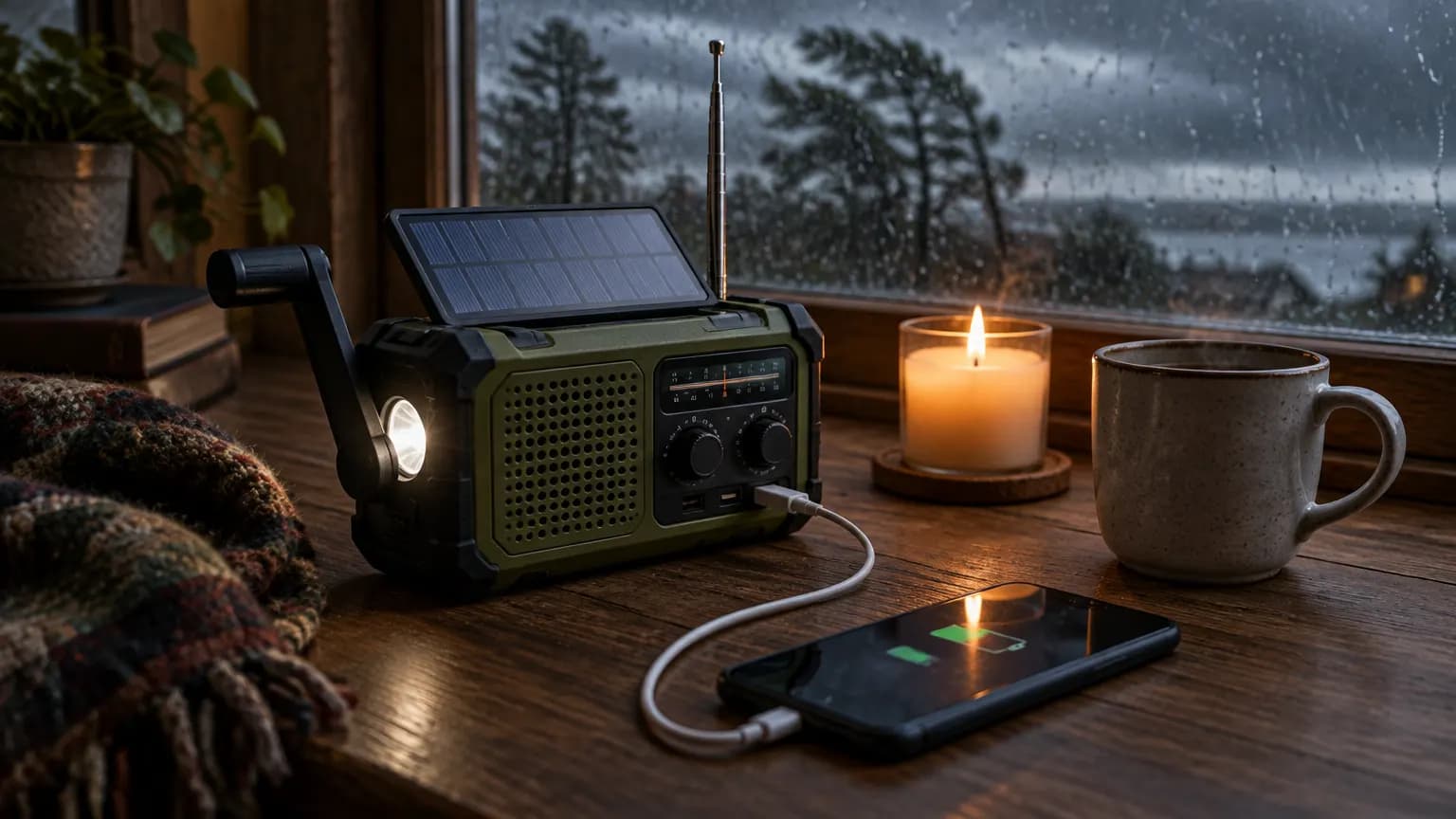
A hand-crank radio earns its place in an emergency kit by doing one job reliably: keeping you connected to information when the grid and cell towers are down. That means the crank mechanism and the battery it charges matter more than any secondary feature.
Look for NOAA weather band support at minimum: it's the fastest way to get official alerts in a US-based emergency. AM/FM coverage matters too, since local stations often carry information NOAA broadcasts don't.
Check the charging options beyond the crank: solar panels and USB input add resilience, and a USB output lets the same unit charge a phone in a pinch. A built-in flashlight and a loud, separate emergency siren are common and genuinely useful additions.
Finally, test the crank-to-runtime ratio before you rely on a unit: a couple of minutes of cranking should buy you a meaningful stretch of radio time, not sixty seconds. Read the specifics rather than trusting marketing copy, and where possible, check independent reviews.